










13th May 2026
VO₂ Max: What It Is and Why It Matters for Your Health
VO₂ Max has been quietly moving from the sports lab into everyday health conversations. It was once a metric exclusively reserved for elite athletes. Today, it's considered one of the most powerful predictors of long-term health. Whether you’re carrying shopping bags into the house or running a marathon, it is relevant to everyone.
In simple terms, VO₂ Max measures how efficiently your body uses oxygen while exercising. Beyond fitness, it offers valuable insight into your heart, lungs and overall health risk.
In this article, we break down what VO₂ Max actually is, why it matters far beyond fitness, and what your score can tell you about your heart health, your risk profile and how well your body is ageing. We'll also walk you through what the test involves, so you know what to expect before you book an appointment.
What is VO₂ Max?
VO₂ Max (maximal oxygen uptake) is the maximum amount of oxygen your body can use during intense exercise. A VO₂ Max score reflects the combined performance of key physiological systems.
As Dr. Wilby Williamson, Head of Preventive Health at Mater Private Network, explains:
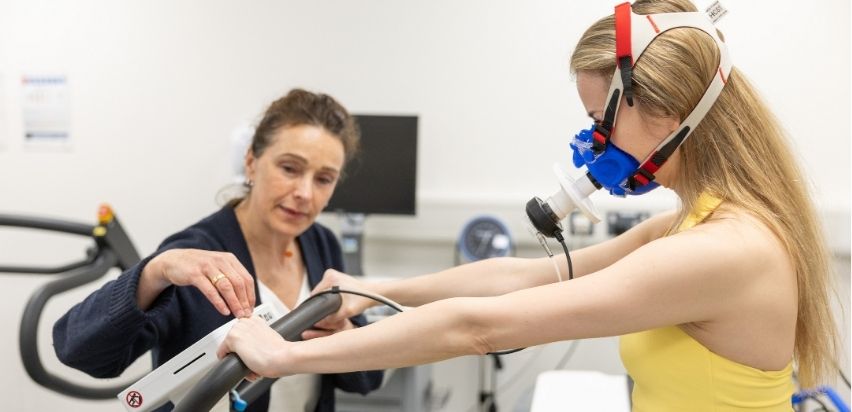
“It is a measure of ‘combined physiology,’ capturing how efficiently these systems respond under physical stress, such as during exercise on a treadmill or stationary bike.”
Unlike more well-known metrics, VO₂ Max stands out because it reflects real-world physical capacity under effort. By drawing on multiple body systems at once, it provides a more complete picture of functional fitness and resilience. This is why it is widely recognised as gold-standard benchmark for cardiorespiratory performance.
.jpg?sfvrsn=ef6e3141_0 "VO2 Max testing")
Why VO₂ Max Matters Beyond Sport
VO₂ Max has evolved from a niche performance metric into one of the most powerful indicators of long-term health. It is a measure of the body’s overall reserve and resilience, how effectively it takes in oxygen, delivers it to tissues, and uses it to create energy, not just during exercise, but for everyday function, healing, and recovery.
Research consistently shows that higher VO₂ Max levels are associated with:
- Lower risk of cardiovascular disease
- Reduced all-cause mortality
- Better overall functional health
Dr. Wilby Williamson notes that individuals with higher fitness levels can live 5–10 years longer than those with low cardiorespiratory fitness.
Weight and BMI are static measures. In contrast, VO₂ Max reveals how your body performs under physical stress, providing a more dynamic and meaningful view of heart function, metabolic health, and physiological capacity, including how well your heart and blood vessels function, your mitochondrial health, and your body’s ability to handle physical and emotional stress.
This physiological reserve matters beyond sport. When the body faces challenges (infection, surgery, cancer treatment, chronic disease, or ageing) people with greater reserve adapt and recover more effectively. Low VO₂ Max is one of the strongest predictors of future health risk and mortality; in some studies, more powerful than smoking, obesity, or high blood pressure.
VO₂ Max is often used to estimate your “fitness age”, which is how your cardiovascular system compares to others your age. For many people, this is a powerful motivator: your chronological age might be 45 but your VO₂ Max could reflect a “fitness age” of 35 – or 55 (Biological age vs fitness age: what is the difference and which one matters more?).
While VO₂ Max naturally declines with age, the rate of decline varies significantly. Lifestyle factors make a major difference, and importantly, it remains one of the most modifiable health markers.
HealthCheck
HealthCheck aims to help people identify risk factors, signs and symptoms of common conditions, which if not detected early could result in serious health issues.
Learn more.jpg?sfvrsn=6c9862d8_0)
What Do the Numbers Mean?
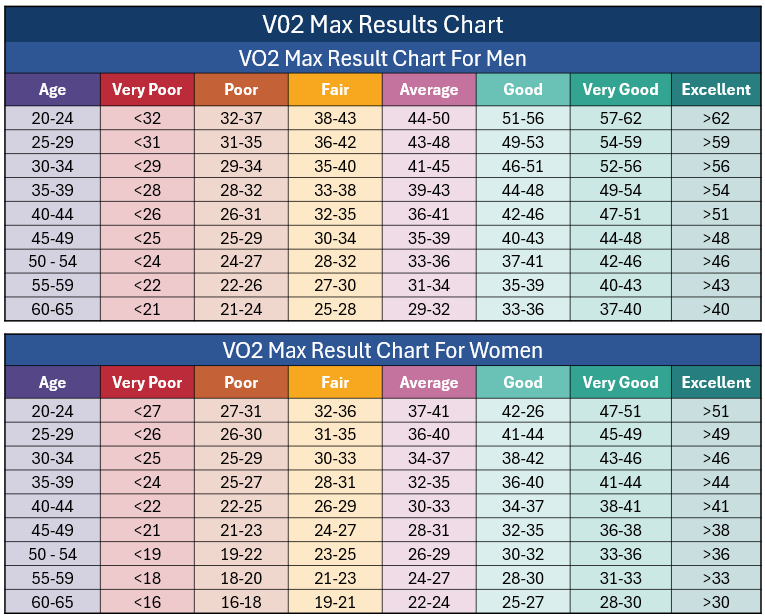
VO₂ Max is measured in millilitres of oxygen per kilogram of body weight per minute (ml/kg/min). Below is a table representing the meaning of test results:
- Very Poor: Daily activity feels difficult. You get out of breath easily (e.g., stairs or short walks), and exercise feels tiring almost right away. Recovery is slow, and overall fitness is low.
- Good: You are clearly fit. Activities like jogging, cycling, or sports feel manageable, and you don’t get tired quickly. Recovery is decent, and everyday physical tasks feel easy.
- Excellent: You are highly fit. Hard exercise feels easier for you than for most people, and you can go longer and faster without tiring. You recover quickly and have strong endurance.
These results are actionable information; it is not a set figure. Since VO₂ Max is trackable over time and responsive to lifestyle changes we recommend an annual HealthCheck, to help personalise your health plan.
Who Should Consider a VO₂ Max Test?
This test is valuable for a wide range of people, regardless of fitness level. It is particularly relevant for:
- Adults aged 35+ interested in preventive health
- Individuals concerned about cardiovascular risk
- People returning to exercise after a period of inactivity
- Those monitoring an existing health condition
- Anyone seeking a deeper understanding of fitness beyond weight or BMI
Can You Improve Your VO₂ Max?
Yes, you can improve it, often more significantly than you would imagine. There are several evidence-based ways to improve your VO₂ Max:
- Build an aerobic base. Regular moderate-intensity activity (brisk walking, cycling, or swimming) is the foundation. Even three to four sessions a week can produce meaningful gains over time.
- Add interval training. Short bursts of higher effort, such as 30-second sprints followed by recovery periods, challenge your cardiovascular system in ways steady-state exercise doesn't. It's one of the most effective methods for improving VO₂ Max.
- Be consistent. Frequency matters more than intensity, especially at the start. Showing up regularly, even for shorter sessions, allows small adaptations to compound into real progress.
- Support it with overall health. Managing blood pressure, maintaining a healthy weight, and improving metabolic health all contribute to how efficiently your body uses oxygen. Fitness and health work together, not separately.
Just remember, you don’t need to train like an athlete. Even modest increases in VO₂ Max are associated with meaningful health benefits and reduced disease risk. Understanding your VO₂ Max gives you a clear, objective measure of your cardiovascular health and a foundation you can build on.
At Mater Private Network in Dublin, VO₂ max testing is offered as part of a comprehensive HealthCheck, combining:
- Advanced diagnostics
- Clinical expertise
- Personalised recommendations
Book your HealthCheck today to understand your fitness, assess your health risks, and take control of your long-term well-being.
.jpg?sfvrsn=eaf4fcbb_1)