










24th April 2026
10 Practical Tips for Managing Irritable Bowel Syndrome Day to Day
Irritable Bowel Syndrome (IBS) is a common digestive condition affecting around 1 in 10 people worldwide and is characterised by symptoms such as abdominal pain, bloating, diarrhoea and constipation. Although IBS does not cause permanent damage to the digestive system, it can significantly affect quality of life.
According to Dr. Sinead Byrne, consultant gastroenterologist at Mater Private Network in Dublin, IBS is a complex condition influenced by several factors including diet, stress, the gut microbiome, and communication between the brain and digestive system.
While there is no single cure for IBS, many people find that lifestyle adjustments and symptom management strategies can help reduce flare-ups and improve day-to-day comfort. In this article, you can find 10 helpful tips for managing your IBS symptoms.
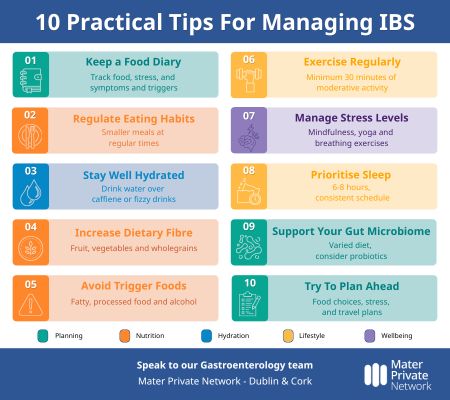
.jpg?sfvrsn=c56a39cd_0 "Practical Tips for Managing Irritable Bowel Syndrome")
How can you identify what foods or situations trigger your IBS symptoms?
Keeping a food and symptom diary can help identify patterns between certain foods and digestive symptoms. Recording meals, stress levels, and symptoms may help highlight potential triggers and support discussions with your GP or dietitian when creating a personalised management plan.
Are your eating habits making your IBS worse?
Eating meals at regular times can help regulate digestion and bowel movements. Skipping meals or eating large meals at different times may worsen symptoms in some people with IBS. Eating smaller meals throughout the day and taking time to eat slowly may support better digestive function.
Does drinking water help manage IBS symptoms?
Drinking enough fluids is important for maintaining healthy digestion and supporting bowel movements. Adequate hydration may help prevent constipation and support overall digestion. Water is the best option, and limiting excessive caffeine or carbonated drinks may help reduce symptoms such as bloating and gas.
What does fibre do for my IBS symptoms?
Dietary fibre can help improve bowel function, particularly for people with constipation-predominant IBS. Fibre rich foods include fruits, vegetables, whole grains, and legumes. However, fibre should be increased gradually as sudden increases may worsen bloating or abdominal discomfort.
What triggers IBS?
Certain foods can trigger IBS symptoms in some people. Common triggers include fatty foods, highly processed foods, alcohol, and foods that increase gas production. Some people benefit from a low FODMAP diet, which reduces certain carbohydrates known to trigger IBS symptoms. This diet is typically introduced under the supervision of a dietitian.
Does exercise help IBS symptoms?
Regular physical activity may help support digestion and improve bowel function. Exercise can also help reduce stress and improve mood, which may benefit people with IBS. The World Health Organisation generally recommend at least 30 minutes of moderate physical activity most days of the week.
Can stress have an impact on IBS symptoms?
The digestive system and brain are closely connected through the gut-brain axis meaning psychological stress can influence digestive symptoms (Mayer, 2011). Stress-management strategies such as mindfulness, yoga, breathing exercises, and regular physical activity may help reduce symptom flare-ups in some people with IBS .
Is your sleep affecting your IBS more than you think?
Sleep plays an important role in maintaining the balance between the gut and the brain. Poor sleep may worsen IBS symptoms and increase stress levels. Maintaining a consistent sleep schedule and aiming for six to eight hours of sleep each night may help support overall well-being.
Could improving your gut health help ease your IBS symptoms?
The digestive system contains trillions of microorganisms known as the gut microbiome, which play an important role in digestion and immune function. Research suggests that changes in the gut microbiome may contribute to IBS symptoms. Eating a varied diet and, in some cases, using probiotics under medical guidance may help support gut health.
What are some planning tips to help deal with unexpected IBS symptoms?
IBS symptoms can sometimes occur unexpectedly. Planning ahead may help reduce anxiety and make daily activities easier.
Helpful strategies include:
- Identifying accessible bathroom facilities when travelling
- Bringing suitable snacks
- Avoiding known trigger foods before important events
- Being prepared can help people feel more confident in managing their symptoms.
Know when it's time to speak to your GP about IBS
While IBS is common, it is important to seek medical advice if you experience symptoms such as:
- Unintentional weight loss
- Blood in your stool
- Persistent changes in bowel habits
- Symptoms beginning after age 50
- A family history of bowel disease or colorectal cancer
A healthcare professional can assess your symptoms and advise on whether further investigation is needed. Should that be the case, your GP can refer you to our Gastroenterology team at Mater Private Network, available across our Dublin and Cork hospitals.
The above content was reviewed by Jane McCarthy, Senior Dietitian at Mater Private Network Dublin.
.jpg?sfvrsn=ac8a10d7_1)
.jpg?sfvrsn=1e88c7a4_1)
.jpg?sfvrsn=ec7c101c_1)